SaaS Vendor Management: A 4-Stage Process for Lean Teams
A 4-stage SaaS vendor management process for lean teams: track owners, renewal dates, and wasted spend, and cut costs without enterprise tooling overhead.
Hermann Lotter
Founder, Easy Entropy
Founder of Easy Entropy, the company behind Resubly. 20 years in operations with a specialization in fintech automation and AI. I built Resubly after watching auto-renewals slip through finance ops processes one too many times, and I write about the operational discipline that turns SaaS renewals from surprises into decisions.
What Is SaaS Vendor Management?
SaaS vendor management is the discipline of overseeing every software supplier relationship from initial purchase through renewal or exit. It covers contract terms, spending, compliance, performance, and ownership across the full lifecycle of each tool in your stack.
Every quarter, mid-market companies lose money to SaaS contracts that nobody reviewed, renewed into tools that nobody uses, or escalated in price because nobody was tracking the clause. The root cause is not bad tools. It is the absence of a system for managing the vendors behind them.
For companies running 20 to 200 SaaS tools, this is no longer optional. The result of skipping it is predictable: auto-renewals trigger without review, unused licenses accumulate, and price escalations go unchallenged because nobody owns the relationship.
Effective vendor oversight connects three functions that typically operate in silos: Finance (cost control and forecasting), IT (security and access), and department leads (adoption and value). When those perspectives converge around shared data, organizations consistently reduce SaaS waste by 20 to 30 percent within the first year.
Sources: Flexera: State of IT Asset Management Report, Zylo: SaaS Management Index Report
Vendor Management vs. Procurement: Why the Distinction Matters
Procurement and vendor management are often used interchangeably, but they solve different problems. Procurement is a point-in-time event: evaluate options, negotiate terms, sign the contract. Vendor management is the ongoing operational work that starts after the contract is signed and continues until the relationship ends.
Procurement asks: "Which tool should we buy, and at what price?" Vendor management asks: "Is this tool still delivering value, who owns the relationship, what are our contractual obligations, and are we prepared for the next renewal?"
In companies with fewer than 500 employees, these responsibilities often fall on the same person. That is fine operationally, as long as the activities are treated as distinct. The procurement decision happens once per contract cycle. The management work happens continuously. Teams that conflate the two tend to over-invest in vendor selection and under-invest in ongoing lifecycle governance, which is where most financial leakage occurs.
| Procurement | Vendor management | |
|---|---|---|
| When | Point in time, before signature | Continuous, from signature to exit |
| Core question | Which tool, at what price? | Still delivering value? Who owns it? What renews next? |
| Activities | Evaluation, competitive bidding, negotiation, purchase approval | Onboarding, performance tracking, usage monitoring, renewal and exit execution |
| Failure mode | Overpaying at signature | Financial leakage across the lifecycle |
The handoff point: once the contract is signed, management takes over. Both disciplines need the same contract data, they just act on it at different times.
What to Track for Every Vendor
A vendor record is only useful if it contains the right fields. Most teams start with a spreadsheet that captures the vendor name and annual cost, then discover months later that they are missing the data points that actually drive decisions.
Contract and financial fields form the foundation. Without accurate term dates, notice periods, and payment details, renewal decisions happen blind. Ownership and operational fields answer the question of who is accountable and whether the tool is earning its cost.
- Contract name, vendor legal entity, and annual contract value
- Payment frequency and cost center allocation
- Contract start date, end date, and calculated notice deadline
- Auto-renewal status with term length on renewal
- Price escalation clause details and cap percentage
- Primary contract owner and escalation contact
- Licensed seats versus active users (monthly)
- Feature utilization rate or adoption score
- Security review status and DPA on file
- Functional category (CRM, analytics, communications, etc.)
Sources: ITAM Review: Software Asset Management Best Practices
The 4 Stages of SaaS Vendor Management
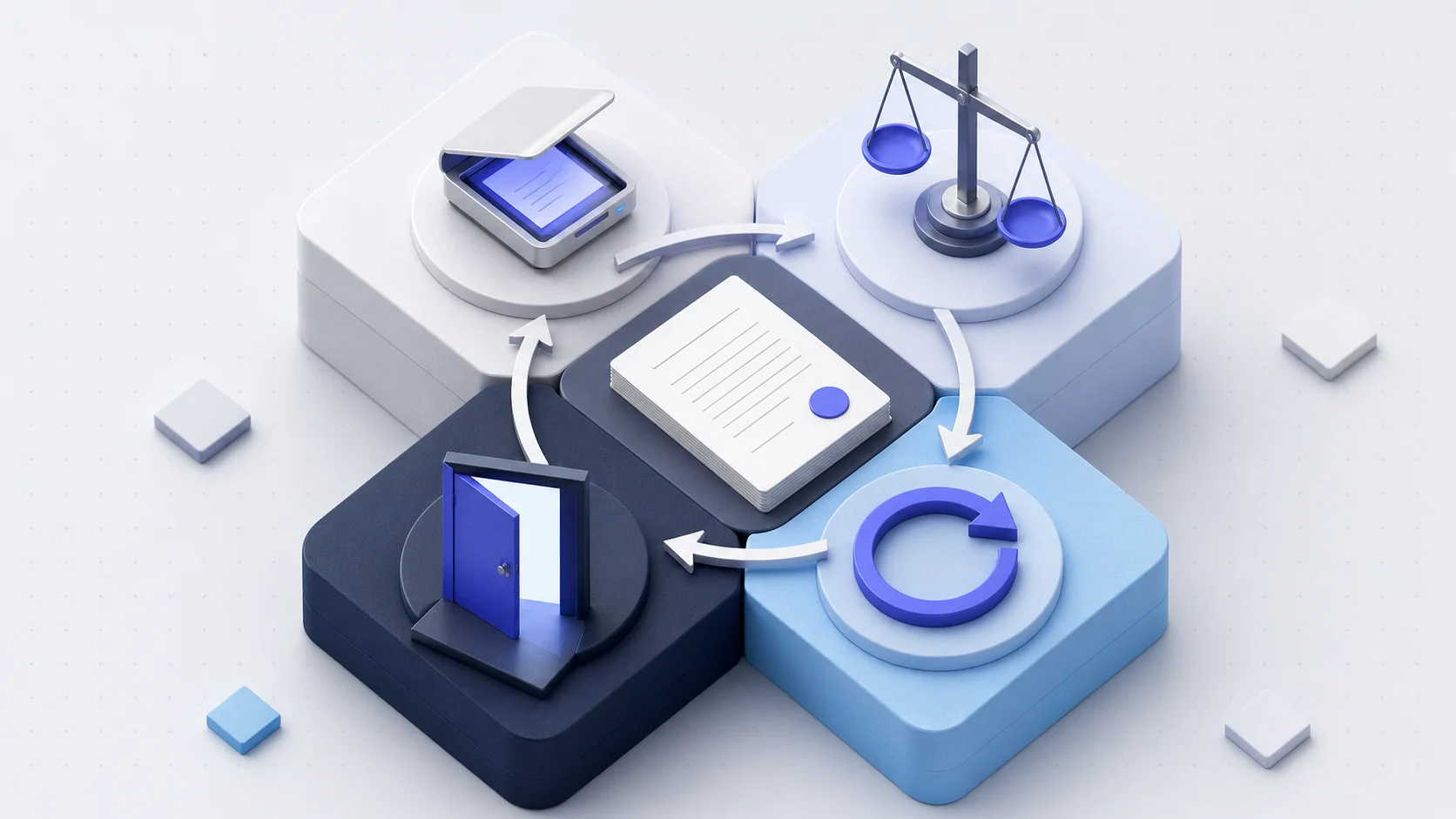
Most mid-market teams do not need a complex framework to start. They need a repeatable process that surfaces the right information at the right time and assigns clear ownership. These four stages work for teams managing 20 to 200 vendor relationships and can be implemented in 30 days.
Phase one is discovery. Export 12 months of payment data from every source: corporate credit cards, accounts payable, bank statements, and expense reports. Normalize vendor names and deduplicate. The goal is a single inventory of every recurring software charge with an annualized cost attached. The SaaS stack audit guide walks through this pass step by step.
Phase two is enrichment. For each vendor, locate the contract and extract key terms: renewal date, notice period, auto-renewal status, price escalation clause, and licensed seat count. Assign an owner to every record.
Phase three is activation. Set alerts for every notice deadline at 120, 90, and 60 days out. Schedule a monthly vendor review meeting where Finance and IT jointly review upcoming renewals, usage anomalies, and unresolved ownership gaps.
Phase four is maintenance. Build an intake mechanism so every new contract enters the system at the point of signature, not months later when someone finds the charge.
- Week 1: Pull all payment sources and build the vendor inventory
- Week 2: Locate contracts and extract key terms for the top 20 vendors by spend
- Week 3: Assign owners, set notice deadline alerts, and schedule the first review meeting
- Week 4: Establish the intake process for new vendors and document the operating cadence
Measuring Vendor Performance Beyond Cost
Cost is the most visible dimension of vendor health, but it is not the only one. Teams that evaluate vendors solely on price miss signals that affect productivity, security, and long-term total cost of ownership.
Adoption and utilization tell you whether the tool is earning its license fee. A $30,000 tool used by 90% of licensed users is a better investment than a $10,000 tool used by 15%. Measuring monthly active users against licensed seats gives you a utilization percentage that directly informs renewal decisions.
Service quality matters for tools on critical workflows. Track support ticket volume, resolution time, and incident frequency. A vendor with frequent outages has a hidden cost measured in team productivity loss.
Security and compliance posture protects the organization from risk invisible on a spending report. Track whether each vendor has a current SOC 2 report, whether a data processing agreement is signed, and when the last security review occurred.
- Utilization rate: monthly active users divided by licensed seats
- Support quality: average ticket resolution time and escalation frequency
- Uptime and reliability: incident count and total downtime hours per quarter
- Security posture: SOC 2 currency, DPA status, last review date
- Net value score: a composite rating that weighs cost, adoption, and risk together
Sources: Flexera: State of IT Asset Management Report, Zylo: SaaS Management Index Report
Common Pitfalls That Derail Vendor Governance
Even teams that start with good intentions frequently hit the same failure modes. Understanding these patterns helps you design a process that survives contact with real organizational behavior.
The most common pitfall is tracking renewal dates instead of notice deadlines. A contract that renews on January 1 with a 90-day notice window requires action by early October. If your system only shows January 1, you will discover the missed deadline in November.
The second pitfall is informal ownership. "The marketing team uses this tool" is not ownership. Ownership means one named individual is accountable for the renewal decision, has access to usage data, and is alerted before the notice window closes.
The third pitfall is treating vendor management as a one-time cleanup project. Discovery audits are valuable, but they decay within months if there is no continuous intake process. Every new contract and every new SaaS charge should enter the system automatically.
The fourth pitfall is over-engineering the process before you have baseline data. Start with a simple list, assign owners, and set alerts. Sophistication can come later. The priority is visibility.
Choosing the Right Tools for Your Stack
At fewer than 15 active vendor relationships, a well-maintained spreadsheet with calendar alerts can work if one person owns it. Once you cross 20 vendors, the maintenance burden exceeds what most teams will sustain manually.
Enterprise solutions like SAP Ariba, Coupa, and Icertis are designed for organizations with dedicated procurement functions. Implementation timelines run three to twelve months and pricing starts at $50,000 per year. For companies under 500 employees, these platforms solve problems that do not yet exist.
Mid-market tools prioritize speed over depth. The features that matter most at this scale are notice deadline tracking, contract document ingestion with AI extraction, ownership assignment, and automated alerts that reach the right person at the right time. That list is exactly what Resubly does, for a flat $99 per month rather than a per-seat price, and it is free for up to 5 subscriptions if you want to test the workflow first.
The most important criterion is time to value. If your next renewal decision is 60 days away, a tool that requires a three-month implementation will not help. Pick the solution that gets your contracts into a system with alerts and owners assigned within the first week.
Sources: Onit: What Is Contract Lifecycle Management?
From Tracking to Strategic Advantage
The immediate ROI of vendor management is defensive: preventing auto-renewal losses, reclaiming unused licenses, and eliminating duplicate tools. Vertice reports that companies actively managing their SaaS portfolio save 10 to 30 percent on average per renegotiated contract.
The longer-term value is strategic. When your organization has clean data on every vendor relationship, the renewal conversation shifts from reactive acceptance to informed negotiation. You know which tools are under-adopted before the vendor calls. You know the competitive alternatives and their pricing. You know your contractual pressure points because someone extracted them months ago.
For Finance and Ops leaders managing the software portfolio at growing companies, the question is not whether to formalize vendor management. It is whether to formalize it before the next avoidable renewal loss or after.
Sources: Vertice: State of SaaS Spend Report 2025
Frequently Asked Questions
What does SaaS vendor management include?
It covers the full lifecycle after purchase: keeping a record of every vendor contract, tracking renewal and notice dates, assigning an owner to each relationship, monitoring usage and spend, and running the renew, renegotiate, or cancel decision before each notice window closes.
What is the difference between vendor management and procurement?
Procurement is the point-in-time work of choosing and buying a tool: evaluation, bidding, negotiation, approval. Vendor management is the continuous work that starts at signature: ownership, usage, performance, and renewals. In smaller companies one person does both, but the activities are distinct and most financial leakage happens on the management side.
What should a vendor management record track?
At minimum: vendor name, annual cost, contract start and end dates, the calculated notice deadline, auto-renewal status, price escalation terms, a named owner, and licensed seats versus active users. Notice deadline and owner are the two fields that prevent the expensive failures.
When do you need vendor management software?
A spreadsheet works up to roughly 15 vendors with one owner. Past 20 vendors, or once any single contract is worth more than a year of tooling, the manual system starts missing dates and dedicated software pays for itself with the first prevented auto-renewal.